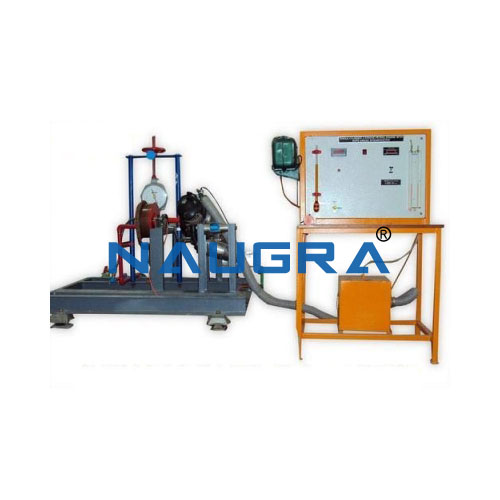
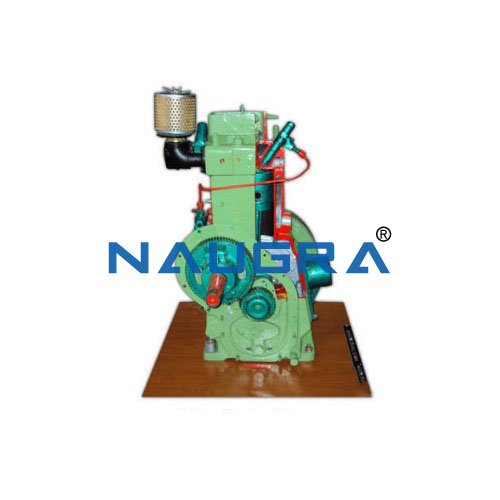
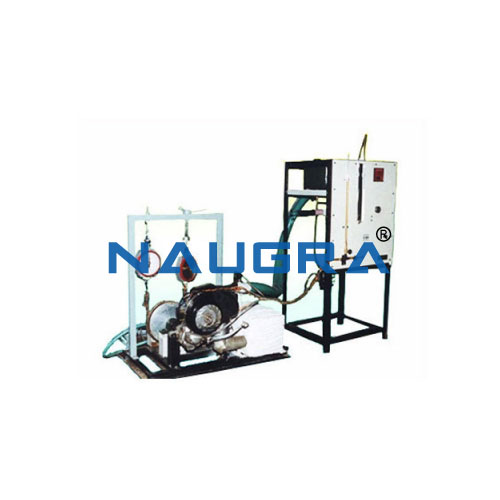
Air-Cooled, Single Cylinder, 2-Stroke, Petrol Engine
Air-Cooled, Single Cylinder, 2-Stroke, Petrol Engine Manufacturer India, Air-Cooled, Single Cylinder, 2-Stroke, Petrol Engine Exporters, Air-Cooled, Single Cylinder, 2-Stroke, Petrol Engine India Suppliers.
Specification for MOE Lab Tenders
Engineering Lab Equipment (Tender Product) Name: Air-Cooled, Single Cylinder, 2-Stroke, Petrol Engine
Product Code: Therm-Lab-0009
Product Description
Technical Specification
Test Stand (Control and Load unit):
• Computer Controlled, Control and Load Unit for Single Cylinder Two Stroke
Petrol Engine with a maximum power output of 7.5kW.
• Test Stand with wheels for mobility and with proper vibration control measures.
• Schematic diagram of the test-rig on the front panel with measurement locations
• Asynchronous motor with regenerative feedback unit as the brake for generating
the engine load, and can be also used as starter motor.
• Engine started by asynchronous motor.
• Force transmission from the engine to the brake unit by means of a coupling
(universal joint/leather pads). Proper attachment to adjust braking torque and brake
speed.
• Quietening vessel for intake air.
• Potentiometer for continuous adjustment of braking torque and speed.
• Vibration damping base plate with damping mass.
• Sensors for measurement and display of Torque, Air Temperature, Air intake
Quantity, Pressure, Speed, Fuel Consumption and Temperature, Exhaust Gas
Temperature and Cooling Water Temperature.
• The unit should be Computer Controlled i.e. commands for operation of unit
should be given from computer.
Air Cooled Single Cylinder Two Stroke Petrol Engine:
• Power output: 4 kW (minimum) and 7.5 kW (maximum) at 4500 rpm
• Compression ratio (minimum): 6:1
• Desirable Additional Features: Possibility of running the engine on LPG and CNG
in addition to petrol.
Electronic Engine Indicating System:
• Cylinder pressure indication system for internal combustion engine
• Chronological representation of pressure curve against the crank angle in P-θ
diagram to determine the maximum pressure and to monitor the ignition point and
the pressure increase.
• Representation of pressure curve against the standardised piston capacity in P-V
diagram to determine the indicated power output.
• System consists of measuring amplifier, TDC sensor and software for Windows
XP, Windows Vista or Windows7.
Air-Cooled, Single Cylinder, 2-Stroke, Petrol Engine — Related Lab Products
Other related teaching lab equipments, scientific lab instruments and civil engineering educational lab equipments like Air-Cooled, Single Cylinder, 2-Stroke, Petrol Engine.
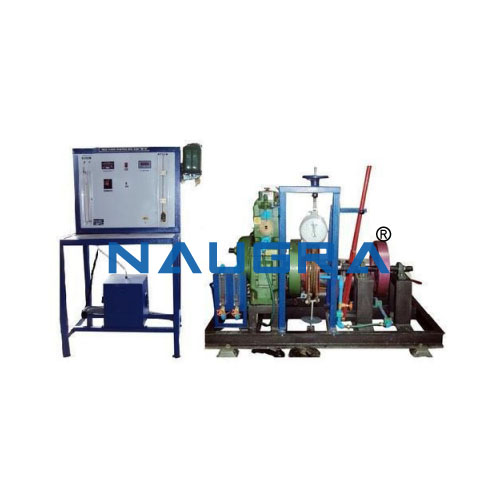

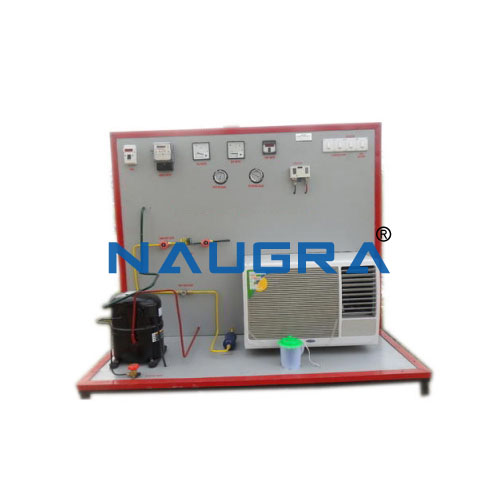
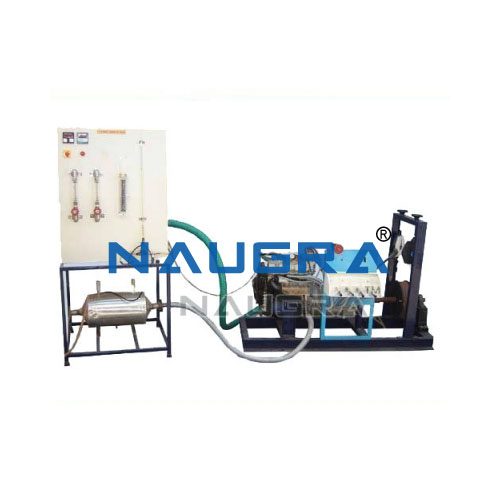
Analyzer.jpg "Exhaust Gas (Flue Gas) Analyzer")
Why Buy Air-Cooled, Single Cylinder, 2-Stroke, Petrol Engine From Us
Leading Manufacturer
Direct manufacturer of Air-Cooled, Single Cylinder, 2-Stroke, Petrol Engine in India — factory prices, no middlemen.
Global Export
Exporting Air-Cooled, Single Cylinder, 2-Stroke, Petrol Engine to 40+ countries across Africa, Asia & the Middle East.
MOE Tender Ready
Complete documentation & specifications for Ministry of Education & institutional tenders.
Customization
Build-to-spec Air-Cooled, Single Cylinder, 2-Stroke, Petrol Engine as per your curriculum & tender requirements.
Air-Cooled, Single Cylinder, 2-Stroke, Petrol Engine for Education & Training
Our Air-Cooled, Single Cylinder, 2-Stroke, Petrol Engine is supplied to educational institutions, technical universities, polytechnics, ITIs and industrial (vocational) training centers worldwide — engineered for hands-on, practical lab teaching and skill development.
Request a QuoteAir-Cooled, Single Cylinder, 2-Stroke, Petrol Engine — Questions
Common questions about buying, pricing and export of Air-Cooled, Single Cylinder, 2-Stroke, Petrol Engine.